Your carrier page may already give customers a phone number, an address and a way to request a quote. Before paying for a separate agency website, identify what you need it to do that the existing page doesn't.
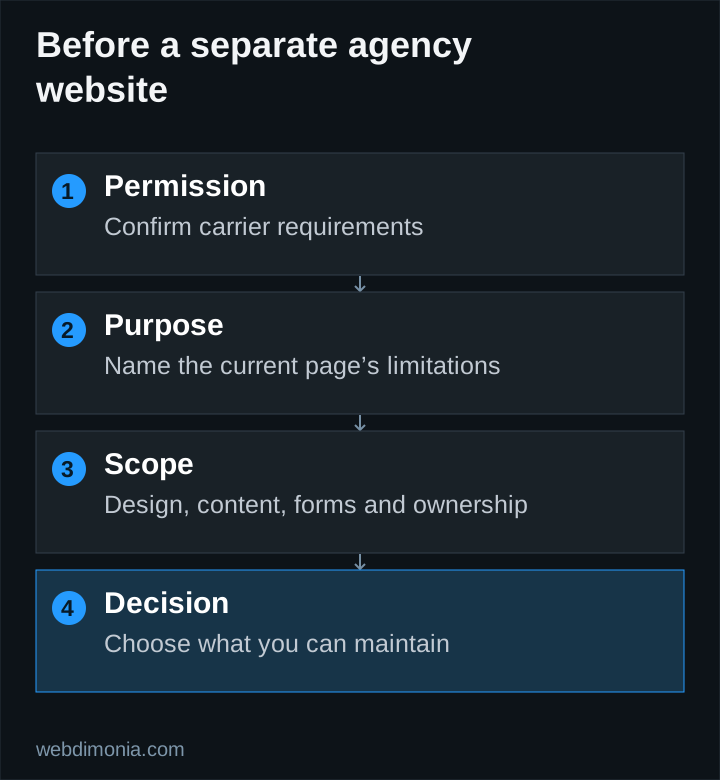
That might be a more distinctive public design, a clearer introduction to your team or a better way to present several offices. Start with those gaps, then confirm your carrier's requirements. A separate website is a business and design decision, not an automatic upgrade just because it's custom.
Start with the limitation you actually need to solve
Write down three things the current page prevents you from doing. Examples might include presenting the team clearly, explaining how your office handles quote requests, creating a useful location page or matching an ad to a relevant service page.
Then ask whether those changes are possible within the existing page. A separate site brings recurring maintenance and another set of facts to keep current. It should earn its place by solving a real problem.
A visual redesign can itself be a valid goal. Your agency may want more distinctive imagery, clearer typography and a more considered mobile experience. Be specific about those changes instead of treating “custom” as an automatic improvement.
Compare capabilities, not labels
| Decision | Carrier-provided page: verify | Separate website: verify |
|---|---|---|
| Design | Which sections and images can change? | Is the layout custom, and is mobile included? |
| Content | What can your office publish? | Who writes, reviews and maintains each page? |
| Inquiries | Which office or system receives them? | How are forms and calls routed and tested? |
| Measurement | Which reports can you access? | Who owns analytics and conversion settings? |
| Ownership | What happens if affiliation changes? | Who controls the domain, files and accounts? |
| Approval | What is already covered? | What requires review before publication? |
Neither column has a universal answer. Ask the actual provider and carrier to demonstrate the capabilities rather than relying on assumptions about platforms.
Plan how the two properties will work together
A separate site does not automatically replace a carrier page. If both remain live, give visitors consistent agency names, office details, phone numbers and hours. Decide which page belongs in approved directories and profiles. Do not create duplicate business listings merely because you now have another domain.
Avoid copying a large carrier resource library onto the new site. Focus on information your office can maintain: its people, real locations, contact process and approved descriptions of the help available. Link to the correct official destination for carrier functions where appropriate.
If a quote button leaves your domain, explain that transition. Confirm that it reaches the intended destination on desktop and mobile. Tracking a button click can show interest, but it does not establish that the visitor completed a quote after leaving your site.
Ask about advertising before you design the pages
A general agency homepage and an ad landing page serve different reading situations. Someone who searches for a particular coverage type should arrive at a relevant explanation and a useful next step, subject to the agency's approved offerings.
If ads are part of the plan, list the products, service areas, response hours and destinations in the website brief. Ask who will create or edit landing pages later. Otherwise, a website quote that looks inexpensive may leave essential campaign work outside the agreed scope.
Read our landing-page guide before commissioning a separate page for every keyword. Often a small number of well-planned destinations is more manageable than a large set of nearly identical pages.
Compare the ongoing responsibilities
The build price is only one line. Include domain renewal, hosting, maintenance, editing support, third-party licenses and future page work. Confirm which costs continue if you stop using the original vendor.
At Webdimonia, insurance agency websites start at $2,000. Care options are listed on our pricing page. A custom dashboard or integration is scoped with the website; it should support real office tasks rather than distract from the public pages customers use.
Use the ownership checklist to record access and handoff terms before paying a deposit. A polished site is a poor investment if no one can explain who controls its domain or how updates get made.
Make the decision with a one-page brief
Your brief can be simple: the present limitation, the intended audience, the required pages, the contact destination, the approval owner and the ongoing budget. Add two or three visual references with notes about specific sections.
Keep the existing page if it meets those needs and a separate site would add little. Consider a custom site when the missing capabilities matter enough to fund and maintain. The strongest argument is a clear fit between the agency's needs and the proposed work, not a blanket claim that every carrier page is inadequate.