 GEICO Exclusive Agency
Northern Shore Insurance
A Maine agency website built around the coast and easy-to-find coverage.
- Client
- Northern Shore InsuranceGEICO Exclusive Agency
- Location
- Portland, Maine
- Services
- Website Design & Development
- Year
- 2026
A Maine agency website that looks and feels rooted here.
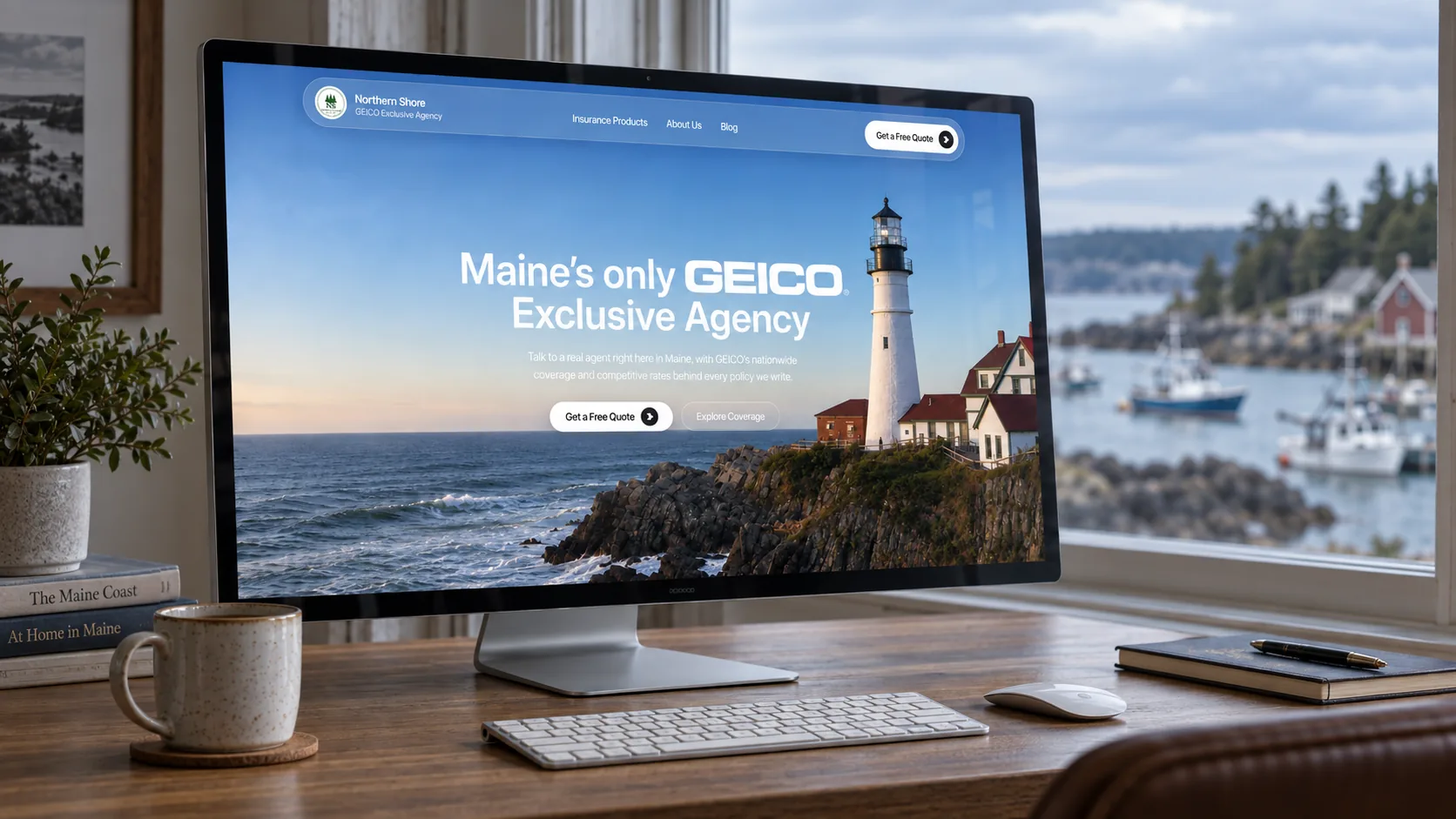
Northern Shore Insurance is Ashley Bullard’s GEICO Exclusive Agency in Portland, Maine. We used the coast to make the site feel connected to the place the agency serves, starting with a lighthouse view on the homepage.
The photography continues through coverage pages and into the harbor closing section. Alongside it, clear navigation, individual product sections and a direct quote path help visitors get to the information they need.
“Working with Webdimonia on the Northern Shore Insurance website was a collaborative process from start to finish. I came in with strong opinions about the design and the copy, and I gave a lot of detailed feedback along the way, from layout notes in Figma to a punch list of small fixes. They took all of it seriously, made the changes, and never made me feel like I was asking for too much. The finished site looks professional, reflects my agency accurately, and gives my clients a clear picture of who we are and what we offer. I’d recommend them to any local business owner who wants a site built with care.”
Ashley BullardNorthern Shore Insurance
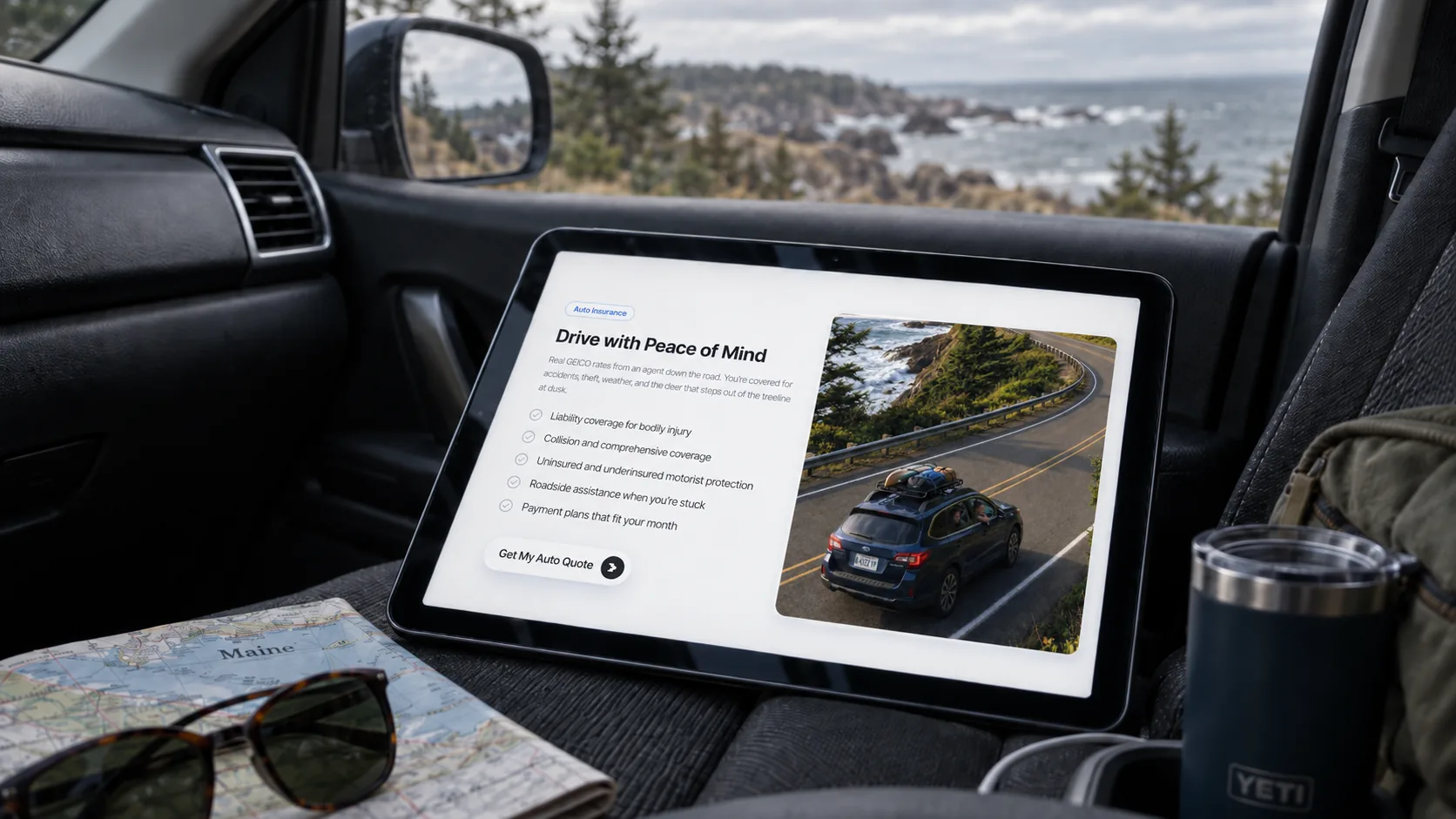
Coverage information stays easy to scan.
The auto section pairs short coverage points with a coastal road image and keeps the quote action close to the information.
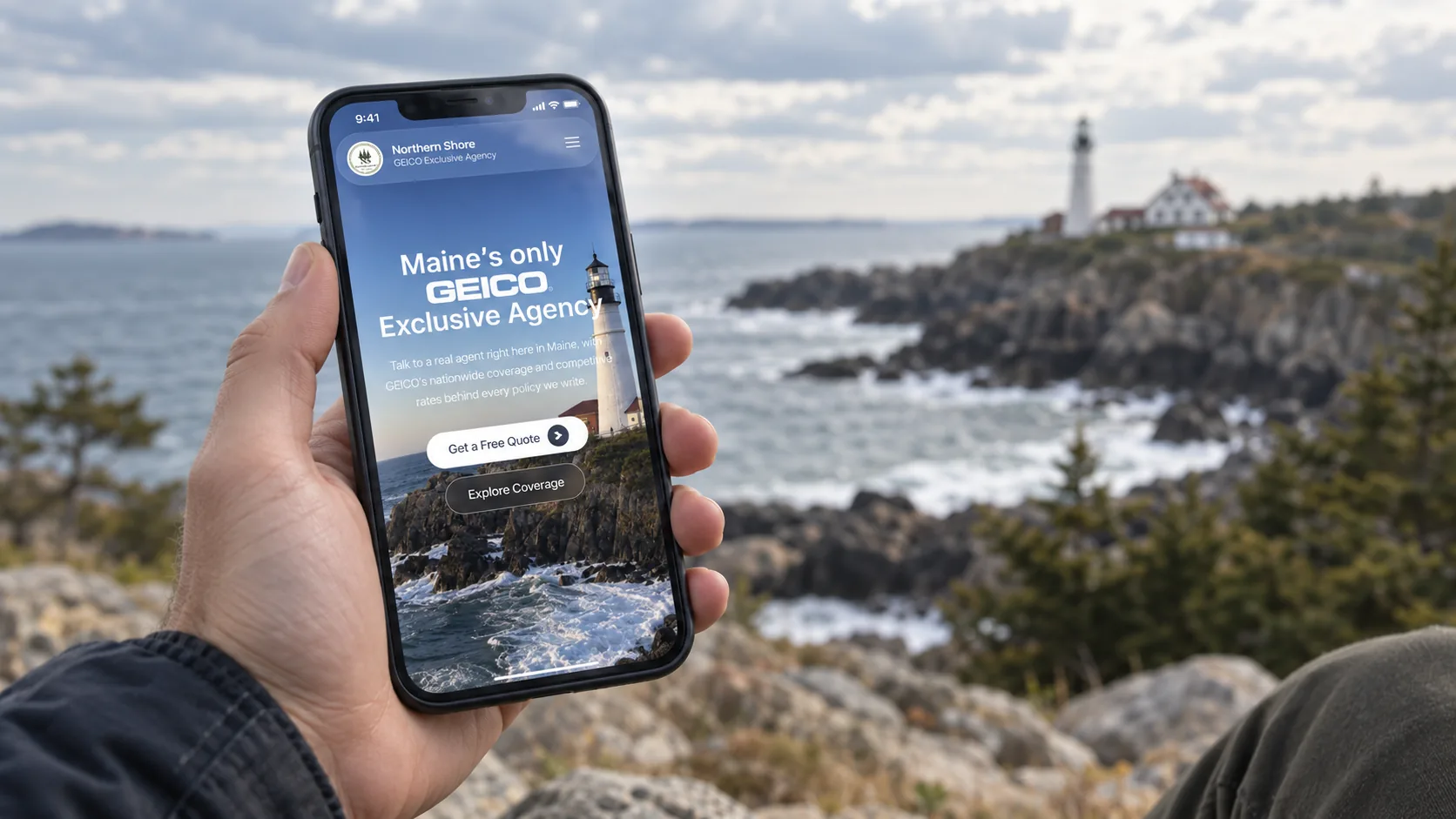
The lighthouse still leads on mobile.
The vertical layout keeps the lighthouse in view while bringing the quote action and compact navigation into a phone-friendly arrangement.
Explore the live siteWhat we designed and built
Insurance agency website design- Custom website design and responsive development
- Home, about and insurance product pages
- Lighthouse homepage and harbor closing section
- Quote request form
- Blog and agency information
- Editable announcements, staff and FAQs
Supplied device scenes show the website design in context.