 GEICO Exclusive Agency
Holestin Insurance
A distinctive website for two Virginia offices, with clear paths to quote or call.
- Client
- Holestin InsuranceGEICO Exclusive Agency
- Location
- Hampton and Virginia Beach, Virginia
- Services
- Website Design & Development
- Year
- 2026
A recognizable home for two local offices.
Holestin Insurance serves Hampton and Virginia Beach. The website needed to present one agency clearly while helping visitors find the right office, understand the available coverage and get in touch.
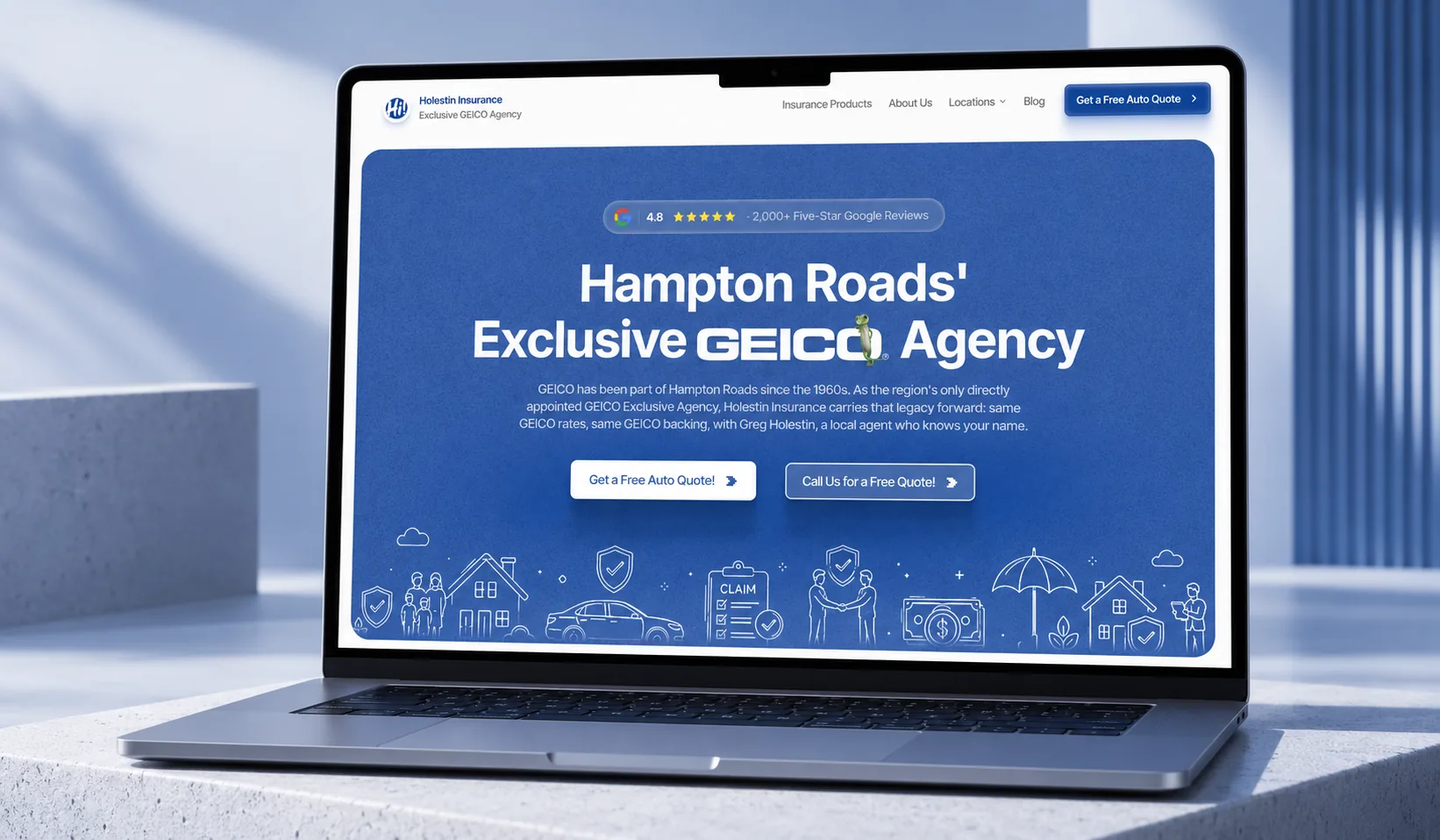
We built the site around a blue visual identity that is easy to recognize across pages. The opening explains who Holestin is, coverage pages make room for practical information, and quote and call actions remain visible throughout. Dedicated location pages give each office its own place on the site.
“Working with Webdimonia was a great experience from start to finish. Elijah and his team took the time to understand our business, listened to my ideas and feedback, and were incredibly responsive throughout the entire process. They were patient and flexible and kept refining things until we got it right. The finished website is modern, professional, and represents our agency extremely well. In fact, once my peers across the country saw the work Elijah and his team had done for us, many of them signed up to work with Webdimonia as well. It was truly a great experience working with them, and I couldn’t be happier with the finished product.”
Greg HolestinHolestin Insurance

Show the people behind the policy.
The team section gives visitors a reason to expect a real conversation. A short introduction and a direct link make the agency feel easier to approach.
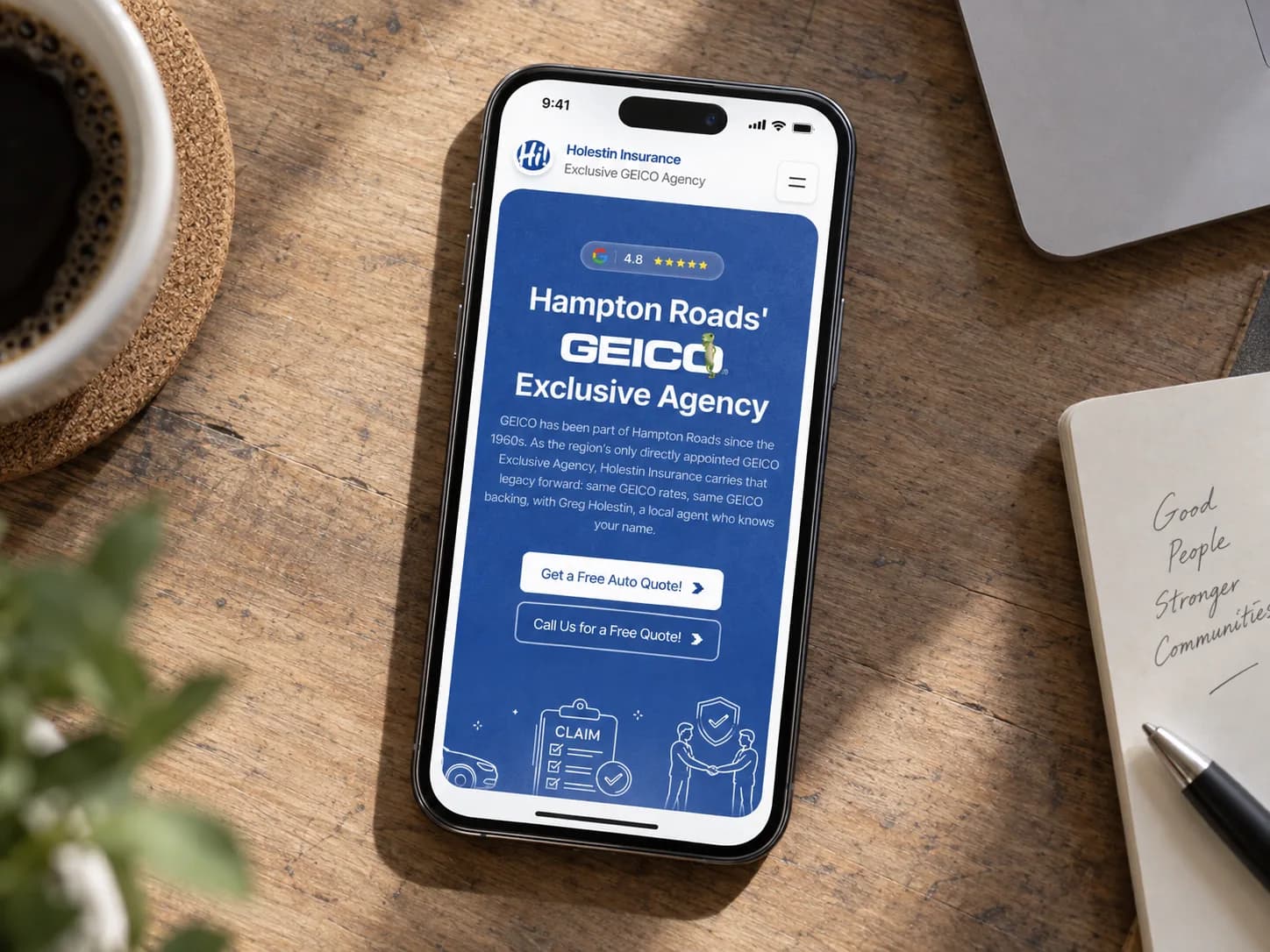
The important actions stay close on mobile.
On a phone, the quote and call buttons sit one above the other. The blue identity and illustrations still feel like the same site.
Explore the live siteWhat we designed and built
Insurance agency website design- Custom website design and responsive development
- Home, about and insurance product pages
- Dedicated Hampton and Virginia Beach office pages
- Quote and phone contact paths
- Blog and community content
- Editable agency content and staff information
Supplied device scenes show the website design in context.